
Do You Need a License to Offer Skin Booster Treatments?
Qualifications, Licensing, and Training in the U.S.
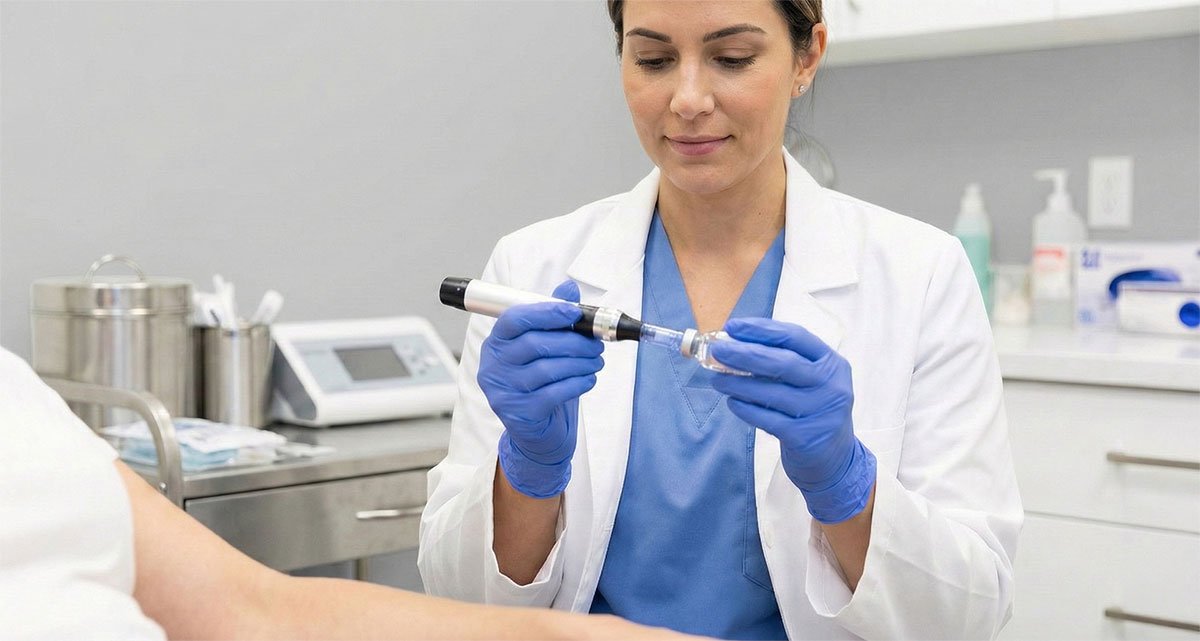
One of the most common questions people ask when they’re interested in entering the aesthetics space is:
“If I take a course, can I start offering skin booster treatments right away?”
As interest in advanced skincare and aesthetic procedures continues to grow, more people are exploring careers in the industry. But skin booster treatments often involve professional devices and techniques—so it’s natural to wonder whether training alone is enough.
In this post, we’ll walk through:
- The difference between skin booster treatments and traditional skincare
- Who can legally offer skin booster treatments in the U.S.
- A realistic step-by-step path to becoming qualified
- Where to look for licensing and scope-of-practice guidance
This is general, neutral information—not legal advice. Regulations vary by state, so always verify the rules where you live and work.
Skin Boosters vs. Traditional Skincare: What’s the Difference?
Skin booster treatments are fundamentally different from topical skincare. The main difference is how deep the treatment is designed to work.
1) Traditional skincare (topical)
Products like creams, serums, and toners mainly work on the skin’s surface (especially the outermost barrier layer).
- Most ingredients primarily affect the surface or upper epidermis
- Penetration into deeper layers is limited
- Results depend on consistent, long-term use
- This is best described as maintenance and surface-level care
2) Skin booster treatments (professional procedures)
Skin booster treatments are typically designed to support results by delivering active ingredients deeper into the skin—often to influence texture, hydration, elasticity, and overall skin quality.
In many professional protocols, deeper delivery is achieved using controlled techniques such as:
- Microneedling (creating micro-channels)
- RF (radiofrequency) microneedling (energy + micro-channels)
- Certain device-based delivery systems that enhance absorption and performance
Because these approaches can involve controlled skin disruption or energy-based devices, they require:
- Strong hygiene and safety protocols
- Proper device operation and clinical technique
- A basic understanding of skin anatomy and contraindications
- An awareness of downtime and recovery expectations
That’s why skin booster treatments are generally considered professional procedures, not simple skincare.
Who Can Legally Offer Skin Booster Treatments in the U.S.?
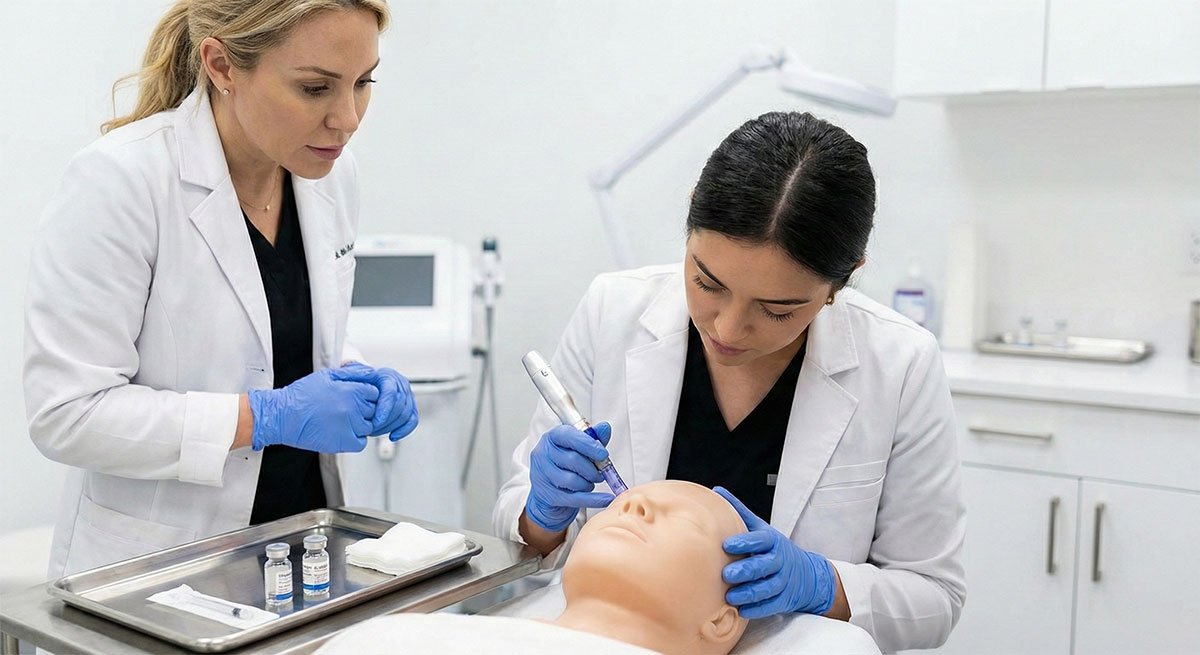
In the U.S., whether someone can legally provide a treatment often depends on:
- How invasive the procedure is
- Whether it’s considered a medical procedure
- Whether it uses a medical device or involves penetration into the dermis
- The state’s rules on scope of practice and supervision
In many states, procedures that penetrate deeper layers of skin or involve injections are restricted to licensed medical professionals (or those working under required supervision).
Common professional roles that may be involved (depending on state law and supervision requirements) include:
- MD/DO (Physician)
- NP (Nurse Practitioner)
- PA (Physician Assistant)
- RN (Registered Nurse)
- LPN/LVN (Licensed Practical/Vocational Nurse) (scope varies widely)
Important: There is no single nationwide rule. State regulations vary, and supervision requirements can differ significantly.
If You’re a Beauty Professional, What’s the Legal Path Forward?
If you’re an esthetician or beauty professional and want to move into higher-level procedures, a compliant path often looks like this:
Step 1: Understand your state’s scope of practice
Before investing in training, confirm what your state allows for estheticians, medical assistants, nurses, and mid-level providers (PA/NP). The most important references are usually your state’s medical board and board of nursing guidance.
Step 2: Pursue the appropriate license (if required)
If your state restricts deeper procedures to medical professionals, common clinical pathways include:
- RN (ADN or BSN) → NCLEX
- PA program → PANCE
- NP program (often after RN)
- MD/DO (medical school pathway)
Step 3: Complete hands-on aesthetic training
Even with a medical license, advanced aesthetic procedures require specialized training and supervised hands-on practice—especially for device operation, safety protocols, treatment planning, and aftercare.
Where to Verify Rules and Find Professional Training Resources
Licensing and professional boards (starting points)
- Nursing (RN/LPN): National Council of State Boards of Nursing (NCSBN) — https://www.ncsbn.org
- Physician Assistants: American Academy of PAs (AAPA) — https://www.aapa.org
- Physicians: American Medical Association (AMA) — https://www.ama-assn.org
- Nurse Practitioners: American Association of Nurse Practitioners (AANP) — https://www.aanp.org
You should also look up your state’s:
- State Medical Board
- State Board of Nursing
- State Board of Cosmetology/Esthetics (for esthetician scope)
Aesthetic education and clinical training (examples)
- American Association of Aesthetic Medicine & Surgery (AAAMS) — https://www.aaams.net
- American Society for Aesthetic Plastic Surgery (ASAPS) — https://www.surgery.org
- The Aesthetic Society — https://www.theaestheticsociety.org
When reviewing training programs, look for hands-on components, instructor credentials, clear scope guidance, and documented safety protocols.
Frequently Asked Questions
𝐐: If I take a course, can I offer skin booster treatments right away?
In most cases, training alone is not enough. If the procedure is considered medical or invasive in your state, you generally need the appropriate license and/or required supervision.
𝐐: Can a non-medical person learn devices like RF or ultrasound?
Some programs allow non-medical learners to study theory or device knowledge. But using it on clients/patients may be restricted depending on the device type and treatment depth.
𝐐: What’s the best first step if I’m serious about this career path?
Start with state scope-of-practice research, then map a plan: license → supervised training → advanced certification → compliance.
Bottom Line
Skin booster treatments are not just “better skincare.” They often involve deeper delivery methods and device-based protocols that require strict hygiene, technique, and safety standards. Because of that, many states limit who can legally provide them.
A responsible path usually includes:
- Confirming state scope-of-practice rules
- Obtaining the appropriate medical license (if required)
- Completing hands-on training under qualified instructors
- Following state compliance and supervision requirements
Want to Learn More About Professional-Grade Skin Booster Solutions?
If you’re building a compliant, high-performance aesthetic practice, Next Aesthetics USA supports clinics with professional devices, protocol guidance, and practice growth resources.
Tip: If your site uses a button block, you can paste the link above into your button and use the text “Visit Next Aesthetics USA”.